


What Are The Types Of Calipers?
There are three primary types of calipers: vernier, dial, and digital. Each type offers different levels of ease of use, durability, and features. Vernier caliper rely on a manual scale and offer durability at a low cost. Dial calipers use a mechanical dial for easier reading without using batteries. Digital calipers are the most widely used type of caliper for the easy to read face and advanced features but come at an expense of battery dependence and a higher cost.
The caliper is one of the most versatile measuring tools that is used today, but not all calipers are created equally. Over the years, there have been different types of calipers that have been developed, each with their own advantages, disadvantages, and best uses.
There are many different types of calipers and we will be going over the main three: Vernier, Dial, and Digital along with some special types of calipers. Whether you’re new to calipers or just looking to brush up on your knowledge, knowing the difference between the three will help you while making your measurements.
In This Article:
This is the fourth article in our series, The Definitive Guide to Calipers.
If you missed the last part of the series: What Does a Caliper Measure?, check it out now!
Vernier Calipers
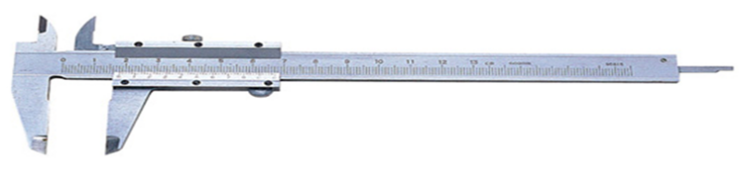
The vernier caliper is the oldest and most traditional caliper that we will discuss. It is also the most difficult to use. In addition to its main scale, it also contains a vernier scale which works hand in hand with the main scale to provide a much more precise measurement. Once the reading is made on the main scale, the vernier scale can be referenced to more accurately measure the component. It does this by providing graduations typically in the tenths or hundredths of an inch, compared to the main scale which is typically graduated in 1/8ths or 1/16ths of an inch.
Pros of Vernier Calipers
Durability
Vernier calipers are known for their durability and longevity.
Cost-Effective
Vernier calipers are often the cheapest of the three primary types of calipers.
No Batteries Required
Vernier calipers do not require batteries, they can be used indefinitely as long as they are properly maintained.
Legacy
Vernier calipers are traditional measuring instruments and many people know how to use them.
Cons of Vernier Calipers
More Skill Required
Vernier calipers require more skill and practice to read measurements accurately, compared to digital calipers or dial calipers.
Least Accurate
Vernier calipers are less accurate than digital and dial calipers. They typically have a measurement error or 0.02mm as opposed to digital calipers that can have a measurement error of 0.01mm.
Less Versatile
Vernier calipers typically have fewer measurement options than digital calipers, they can’t switch units and have less features.
Dial Caliper
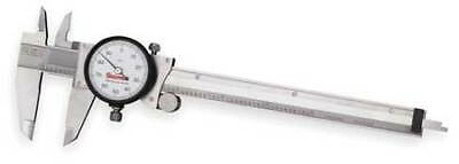
The dial caliper was invented to address the issue of misreading a vernier caliper. A dial calipers still has a linear beam for the sliding jaws, but instead of a vernier scale, it uses a circular dial gauge to display the final fractional part of the measurement. As you open and close the caliper, a tiny gear move along with the beam which will then turn the dial hand. Typically one full revolution corresponds to 0.1 inch or 2 mm and the dial is divided into 100 increments, so each dial division is 0.001″ or 0.02mm. The combination of the main scale on the beam for the larger whole unit and the dial reading will give you your final measurement.
Pros of Dial Calipers
Durable
Much like vernier calipers, dial calipers can also withstand heavy usage and often last longer than digital calipers.
Easy to Read
Dial calipers are easier to read than a vernier caliper as the dial automatically displays the more precise measurement.
No Batteries Required
Also, just like vernier calipers, dial calipers do not require batteries, meaning they can last a long time and the overall operating cost is less than that of a digital caliper.
Cost-Effective
Dial calipers are often less expensive than digital calipers.
Cons of Dial Calipers
Less Accurate
Dial calipers are less accurate than digital calipers, but can generally be more accurate than a vernier caliper. They typically have a measurement error of 0.02mm as opposed to digital calipers that can have a measurement error or 0.01mm.
Less Versatile
Also, like vernier calipers, dial calipers typically have fewer measurement options than digital calipers as well.
More Complicated to Use
Dial calipers are easier to use than vernier calipers, but are still not as easy to use as digital calipers which can make it hard for beginners.
Digital Calipers
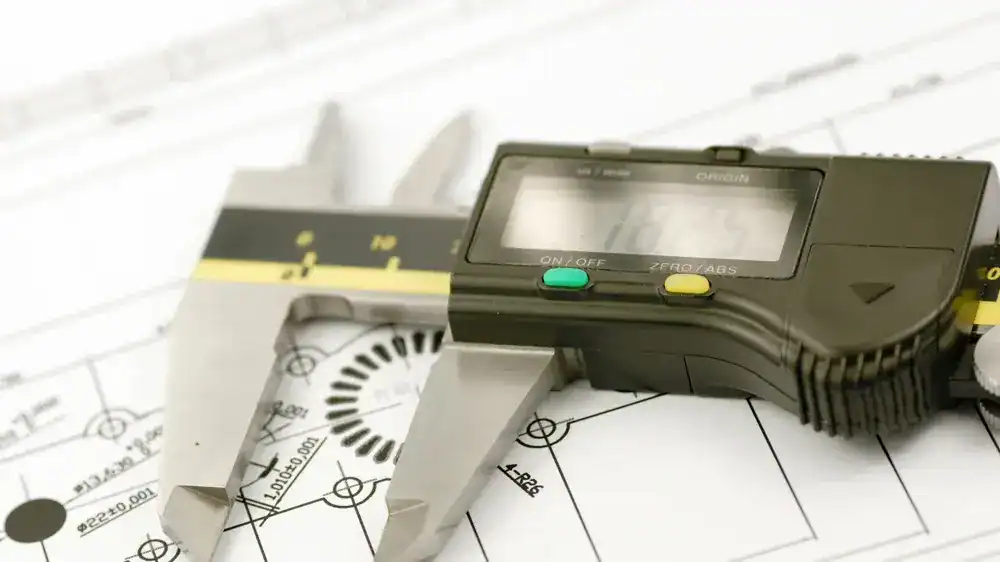
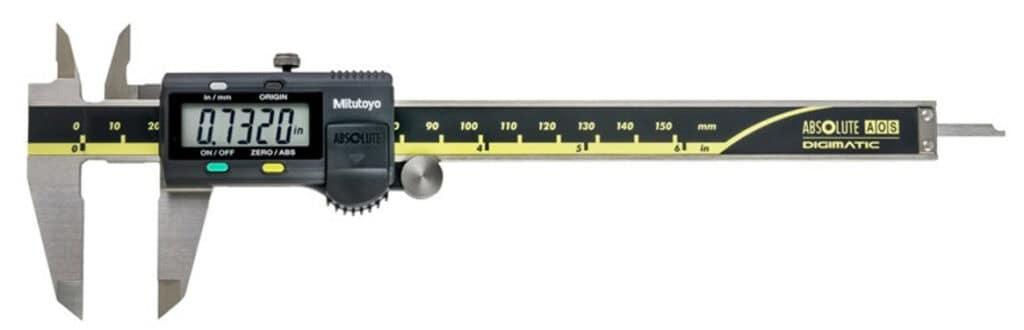
Out of all the calipers discussed, the digital caliper is the most recently developed. This style of caliper uses a linear encoder and most digital calipers can switch between units such as centimeters, millimeters, or inches when getting a reading. Each setting provides a zeroing on the display and any point along the slide. Due to its high level of accuracy, it is commonly seen in professional settings.
Pros of Digital Calipers
High Accuracy
Digital calipers are known for their high accuracy, they typically have a measurement error or 0.01mm. Since these types of calipers have higher accuracy they are more commonly found in a quality environment where that level of precision needs to be maintained over time through calibration and is meeting its stated specifications.
Easy to Use
Digital calipers are easy to use, the digital display is simple and easy to understand.
Versatile
Digital calipers typically have many measurement options, they can switch units and have more features.
Data Connectivity
Many digital calipers offer a serial data output. This feature allows the caliper to be interfaced with a dedicated recorder or computer to store the data which significantly reduces the time to make, read, and record a series of measurements. In addition, it eliminates the human error on the reliability of the records.
Convenient
Digital calipers are more convenient to use than other types of calipers, they don’t require manual zeroing and have an easy to read digital display.
Measurement Freeze
Some digital calipers have a hold function that allows you to freeze the measurement reading on the display, making it easier to record the measurements.
Cons of Digital Calipers
Battery Dependent
Digital calipers require batteries to function, so they can be less reliable than manual calipers once the battery life starts to diminish.
Fragile
Digital calipers can be more fragile than other types of calipers and are more likely to break if dropped.
Liquid Sensitive
Digital calipers are more prone to damage from water, lubricants and coolants due to its electronic components. This can be a major issue when used on a machining shop floor. However, most brands offer IP rated calipers, which we will discuss more later in this series, to combat this.
Expensive
Digital calipers can be more expensive than other types of calipers.
Special Types Of Calipers
While vernier, depth, and dial calipers can cover numerous measurement needs, some tasks call for special types of calipers. These special types of calipers are built for unique applications where the standard calipers fall short. A special type of caliper is typically used when these situations arise:
- Accuracy Needs: Specialty calipers can provide better precision for their intended measurement
- Efficiency: A specialty caliper can allow faster, easier measurements for specific tasks than compared to using a universal caliper.
- Industry Standards: Certain industries are going to require specialty calipers to be used to meet the regulator or performance standards.
At the end of the day, you are going to be using your vernier, dial, and digital calipers more, but there are going to be tasks that come up that involve one type of a specific measurement. Below are a few examples of the most common specialty types of calipers and what they are used for.
Knife Edge Calipers
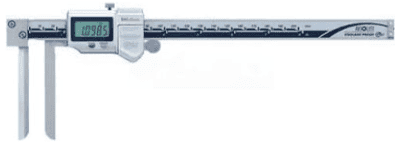
The knife edge caliper is built to measure internal diameters which can not be reached by the outside jaws on a regular caliper. The jaws on this caliper are much longer and narrower than the standard caliper so you are able to reach spots that are tough to take an inside measurement on.
Gear Tooth Calipers
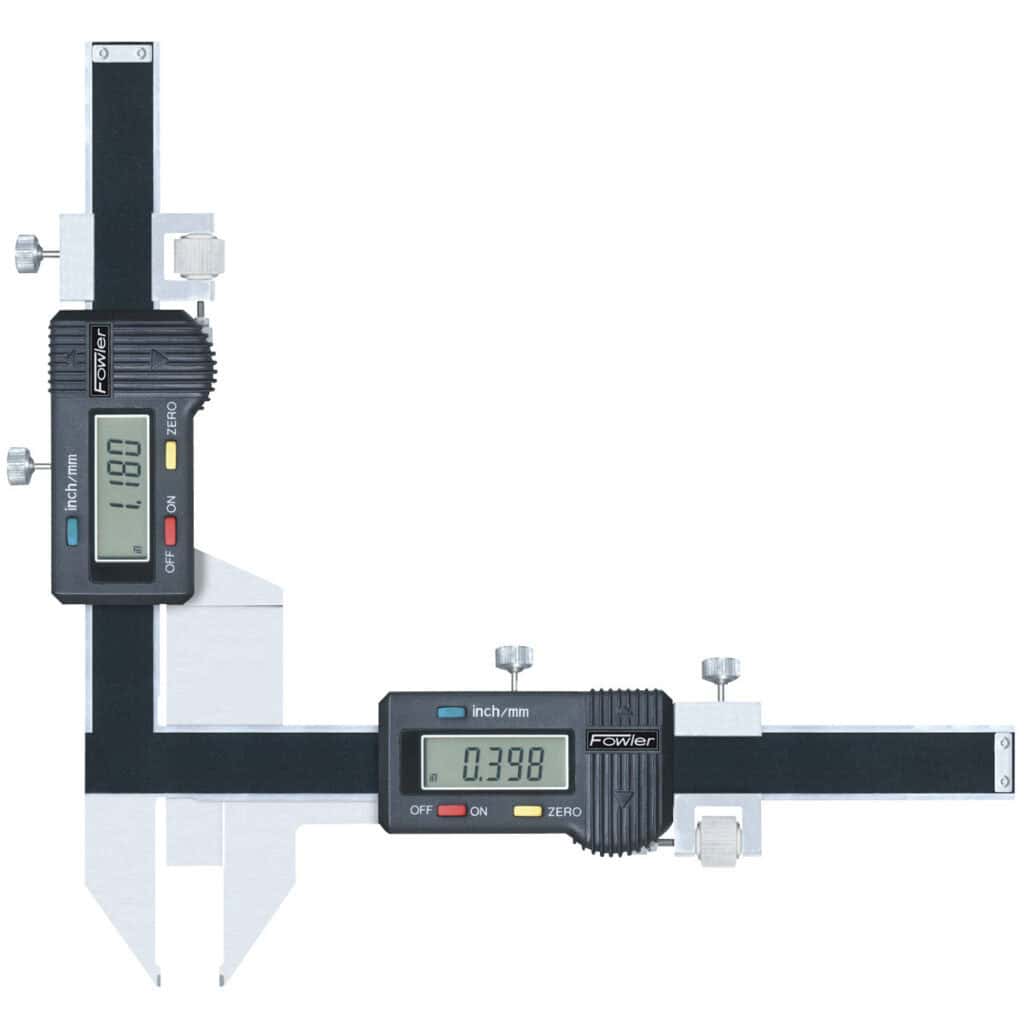
Gear tooth calipers are designed to measure the thickness of gear teeth at a defined point. These types of calipers take measurements to ensure gears mesh smooth and perform reliably. This works by using two independent adjustable measuring contacts. One to set the thickness of the gear tooth and the other to establish the measuring depth from the gear’s pitch circle. Gear tooth calipers are typically found in the automotive, aerospace, and heavy machinery industries.
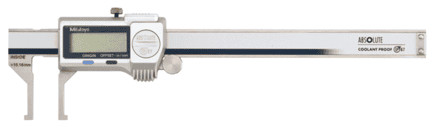
Inside Groove Calipers
The inside grove caliper is designed to measure internal grooves, recesses, and undercuts that are located inside a bore or hole where a standard caliper can not reach. Unlike the standard caliper, an inside groove caliper has jaws that are narrow, extended, and hooked so that it can access the grooves that are set back from the opening of a bore.
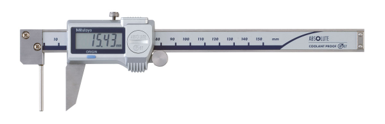
Tube Thickness Calipers
A tube thickness caliper is designed to take measurements of the thickness of tubes, pipers, and hollow cylindrical parts. The caliper is designed with two different types of jaws. One being a narrow rod-like structured jaw to place inside the cylindrical part and the other part of the jaw being used to place on the outside of the cylindrical part to be able to measure the thickness of the part.
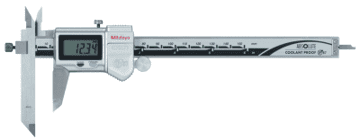
Offset Calipers
An offset caliper is used to measure when thicknesses are, you guessed it, offset. These calipers have one jaw that is longer than the other jaw. With this you are able to measure the thickness of parts that are not the same height of each other where a normal caliper may not be able to reach both surfaces.
Conclusion
Just like everything else in life, everything has its pros and cons, and for the three main types of calipers, they too have their pros and cons. Each type of caliper has its own place depending on the job, environment, and the overall preference of the user. If going the old route and having a low cost on tools, vernier would be your choice. For durability and readability, the dial caliper is a solid choice. The digital caliper will give you high accuracy and advanced features. However, at the end of the day the best caliper to use is going to be one that you feel the most comfortable with and helps you measure with confidence.
Caliper Types FAQs
Q1. Which type of caliper is the best for beginners?
Typically, digital calipers are the best type of caliper for beginners to use. They are simple, have a clear measuring display, and have modern features such as automatic zeroing.
Q2. Are vernier calipers outdated?
Far from it. Vernier calipers are still used widely today due to their durability, low cost, and independence from batteries.
Q3. Do all types of calipers need calibration?
Yes. Like all precision instruments, vernier, dial, and digital calipers all need to be calibrated to ensure accuracy and consistent measurements, especially if they are being used in an industrial setting.
Q4. Are digital calipers worth the higher price?
If you are working in a professional setting where accurate measurements are essential, then yes, it is worth paying the higher price.
Q5. Are special types of calipers more expensive than standard calipers?
The prices on specialty calipers are going to vary, but they can be more expensive due to their specific cases and design. However, they can save you costs in the long run by reducing measurement errors.
The Definitive Guide To Calipers
What’s Next: What Are The Different Caliper Sizes?
We have gone over the three main types of calipers: Vernier, Dial, and Digital along with some special types of calipers.
In the next article, we will be diving into different sizes of calipers and how to select the right one for your measurement needs. Lets get started and head to Section 5: Caliper Sizes and How to Select the Right One.
ISO/IEC 17025 Accredited Caliper Calibration
Fox Valley Metrology offers precise caliper calibration for any make or model. Our ISO/IEC 17025 accreditation guarantees testing to the highest industry standards. We offer fast, reliable in-lab or onsite calibration services to fit your needs and schedule.
- ✓ ISO/IEC 17025 accredited calibration vendor
- ✓ Broadest calibration scope in the industry
- ✓ 3-5 day turnaround time in-lab calibrations
- ✓ Pickup and delivery service options
- ✓ Onsite calibration available