


What Is The History Of The Multimeter?
The first multimeter was invented by Donald Macadie in 1920. He was dissatisfied with needing to carry multiple electronic meters and invented a machine that could test Amperage, Volts and Ohms, naming it the AVOmeter. Since then, the multimeter has undergone numerous advancements, most notably transitioning from analog to digital display.
In the world of electrical engineering, the multimeter stands as a ubiquitous tool, serving as a fundamental instrument for measuring various electrical quantities.
Its history, rooted in the fascinating journey of electrical advancements, showcases a series of innovations that have transformed the way we interact with and understand electricity.
This article delves into the captivating narrative of the multimeter’s evolution, highlighting key milestones and shedding light on its significance in modern times. We will walk through its inception from very humble beginnings, onto the first attempts to combine multiple electric meters into one. We will then explore the transition the multimeter underwent going from analog to digital.
In This Article:
- Early Electrical Measurements and Challenges
- Birth of the Multimeter: A Technological Leap
- From DC to AC
- Transition from Analog to Digital Multimeters (DMMs)
- Modernization of Multimeters
- Multimeter History FAQs
This is the second article in our series, The Definitive Guide to Multimeters.
If you missed the first part of the series: What Is a Multimeter?, check it out now!
Early Electrical Measurements And Origins Of The Multimeter (1800s – 1900s)
The history of the multimeter traces back to the late 19th and early 20th centuries, an era marked by groundbreaking discoveries in the field of electricity and magnetism.
The first instrument capable of electric measurements was the galvanometer, created in 1820.
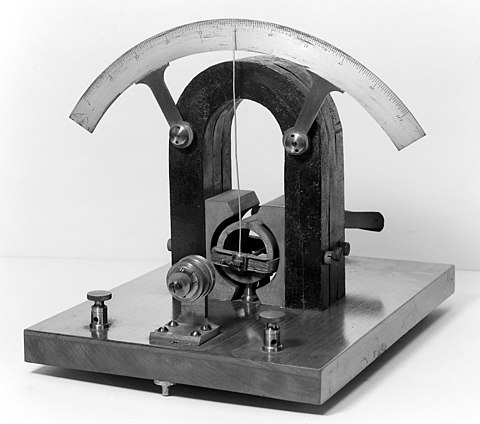
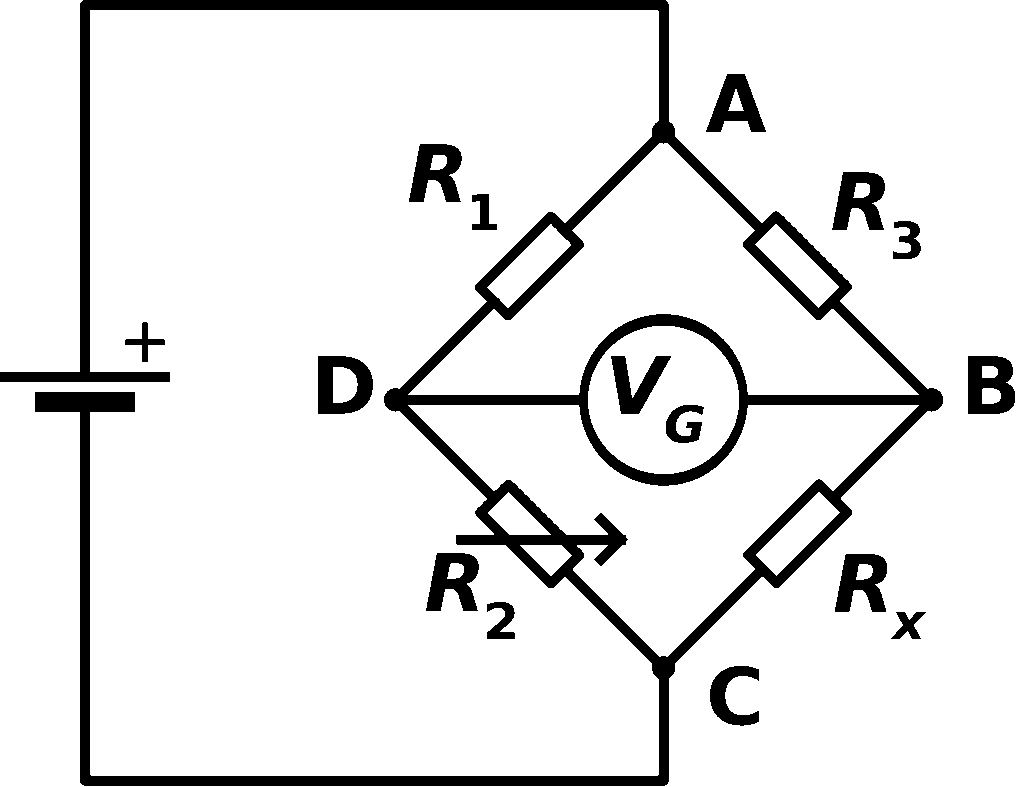
The galvanometer used a Wheatstone bridge to measure resistance and voltage by moving a pointer across a scale. These groundbreaking devices were great for use in a lab, but were very bulky, making them impractical for use in the field.
As a result, the focus started to shift towards portability. Since it was difficult to make a multi-purpose instrument that was also portable, the first simple voltmeters and ammeters were standalone devices with limited capabilities, largely used for basic measurement tasks. However, as the demand for more comprehensive and multi-functional measuring devices grew, innovators began contemplating the idea of a multimeter.
Birth Of The Multimeter: A Technological Leap (1920)
In 1920, British Post Office engineer, Donald Macadie, dissatisfied with the need to carry separate meters for different parameters, invented the first-ever multimeter known as the AVOmeter (an acronym for Ampere, Volt, Ohm meter). This was a significant milestone in the history of electronic measurements as it consolidated multiple measuring functionalities into a single device. While it did not carry the designation of a “multimeter”, it is widely considered as the first multimeter.
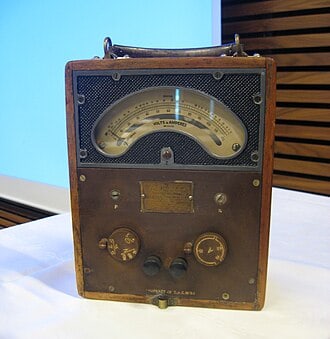
The Automatic Coil Winder and Electrical Equipment Company (ACWEECO) was founded in 1923 and tasked with manufacturing the AVOmeter. The first AVOmeter available for public purchase went on the market that same year.
The first AVOmeter had a sensitivity of 60 Ω/V, three direct current ranges (12 mA, 1.2 A, and 12 A), three direct voltage ranges (12, 120, and 600 V or optionally 1,200 V), and a 10,000 Ω resistance range.
While the AVOmeter underwent 8 different iterations, the basic functionality of the unit did not change much through each of those. However, one major improvement was the release of the first fully portable model in the 1930s. It also increased its capacity to 13 ranges (from the original three ranges).
How Multimeters Advanced From Direct Current (DC) To Alternating Current (AC) (1930s – 1950s)
Macadie’s AVOmeter laid the groundwork for further enhancements and developments. Throughout the mid-20th century, the multimeter underwent several transformations, evolving both in design and functionality. Changes were made to the casing, size, circuitry, and range-switching facilities to enhance usability and accuracy.
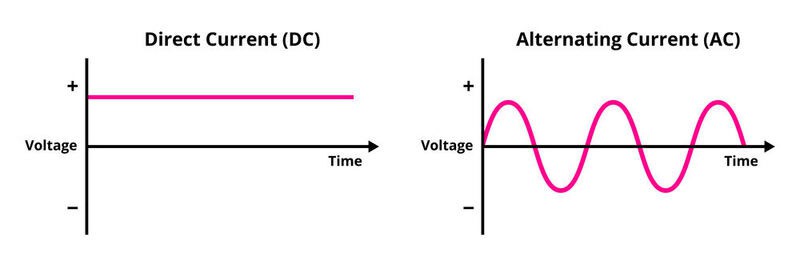
The next most notable development came in the form of the Westinghouse Universal meter. One major limitation of the AVOmeter was that it could only measure in Direct Current (DC). Westinghouse solved this problem by incorporating the “copper oxide instrument rectifier”, allowing the meter to also measure in Alternating Current (AC). It also allowed the unit to measure 20 ranges, instead of the AVOmeter’s 13 ranges.
Transition From Analog To Digital Multimeters (DMMs) (1970s – 1980s)
Analog multimeters, marked by a pointer moving over a scale, were the standard for several decades until digital technology made its way into the field.
As early as the 1950s, inventors were trying to create digital multimeters, but the technology simply wouldn’t support this design yet. It wasn’t until the 1970s when we saw the arrival of the first digital multimeters (DMMs), when the semiconductors needed became practical for use. This ushered in a new era of precision, reliability, and user-friendliness.
In 1977, the American manufacturing company, Fluke Corporation, introduced the Fluke 8020A, the first portable and handheld digital multimeter. The company, renowned for its high-quality measurement products, played a pivotal role in promoting the adoption of digital multimeters worldwide.
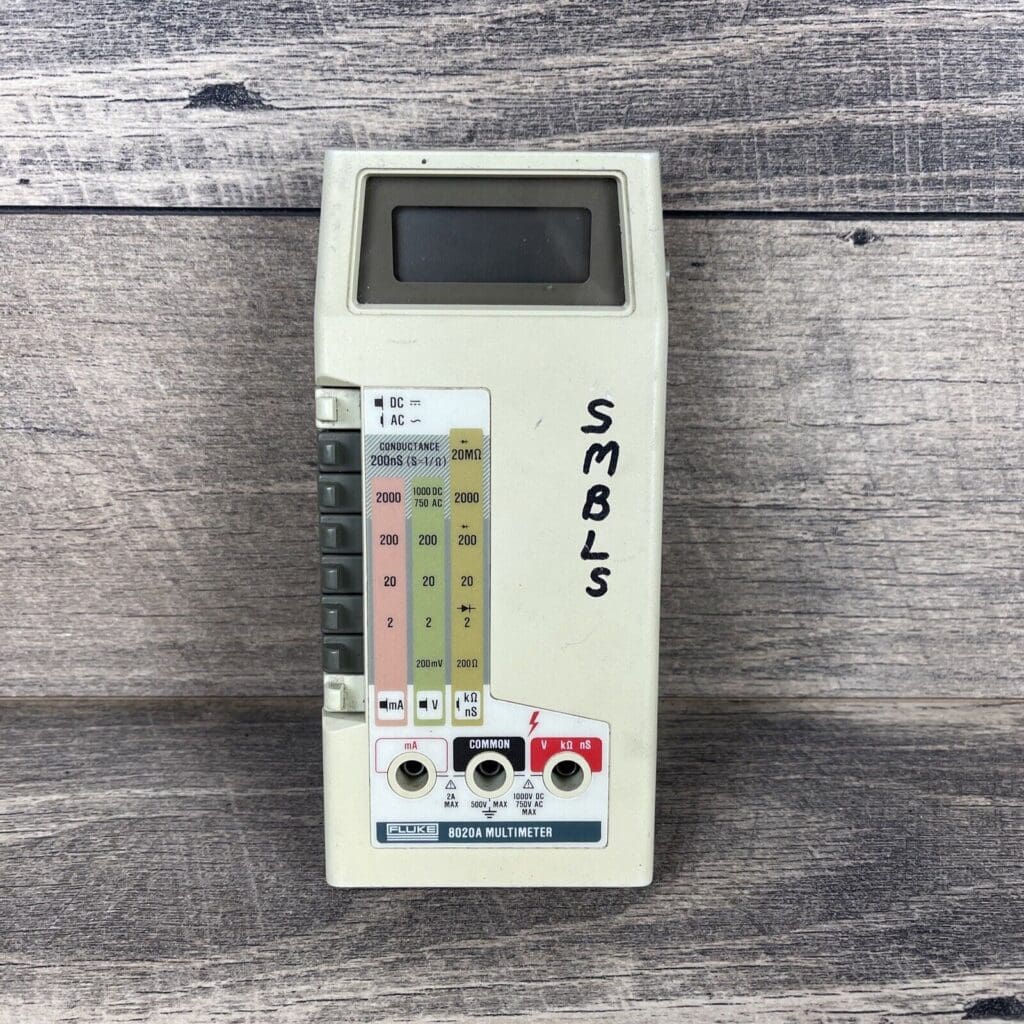
The Fluke team designed a metal oxide semiconductor (CMOS) analog-to-digital converter chip to drive its LCD screen. The unit solved numerous problems, as it was very accurate (within 0.25 percent of reading +/- 1 digit), light on battery use (lasting up to 200 hours), reliable and exceptionally durable. Best of all, it was quite affordable at $169 (USD).
The digital multimeter was wildly popular, as the Fluke 8020A (and its subsequent variants) sold over a million units through its lifespan.
Digital multimeters brought with them several key advantages over their analog counterparts (which we will discuss later), making them increasingly popular in the industry. With their ability to provide readings as numerical displays and a higher degree of accuracy, digital multimeters revolutionized the way measurements were made. Furthermore, they came with increased impedance, thus reducing the meter’s impact on circuit operation.
Modernization Of Multimeters (1990s To Now)
As technology advanced so did the multimeter.
The most major advancement was adding microprocessors to digital multimeters, making them even more powerful. Now they can do complex math, save measurements, and even communicate directly with computers.
Additional advancements came in several forms:
- True-RMS Measuring
- Auto-Ranging Functionality
- IP Rated Multimeters
With this increase in modernization, the ability of maintain long-term measurement accuracy has become even more critical. Many organization rely on routing verification and professional multimeter calibration services to keep their multimeters performing to their desired specification.
Conclusion
If any of those things do not make sense to you, no worries. We will be diving head-first into the intricacies of multimeter design and construction in the next few blog posts.
Additionally, we will be ending the guide with some educated guesses into where the future world of multimeters will take us.
Multimeter History FAQs
Q1. Who invented the first multimeter?
Donald Macadie, a British engineer, invented the AVOmeter in 1920.
Q2. Why did digital multimeters replace analog?
Digital multimeters offer greater accuracy, numerical readouts, and higher impedance, reducing circuit interference.
Q3. What’s new in multimeters?
New multimeters have smart features like IoT connectivity, AI diagnostics, and app integration for real-time data analysis.
Q4. How did the AVOmeter impact electrical work?
The AVOmeter enabled field testing by combining multiple measurements, which improved efficiency.
The Definitive Guide To Multimeters
What’s Next: What Does A Multimeter Measure?
Now that we know how multimeters evolved over time, lets start getting into the nitty-gritty.
In the next section, we will dive into the different types of measurements a multimeters can make. Let’s get started and head to Section 3: What Does A Multimeter Measure?
ISO/IEC 17025 Accredited Multimeter Calibration
Fox Valley Metrology offers precise multimeter calibration for any make or model. Our ISO/IEC 17025 accreditation guarantees testing to the highest industry standards. We offer fast, reliable in-lab or onsite calibration services to fit your needs and schedule.
- ✓ ISO/IEC 17025 accredited calibration vendor
- ✓ Broadest calibration scope in the industry
- ✓ 3-5 day turnaround time in-lab calibrations
- ✓ Pickup and delivery service options
- ✓ Onsite calibration available