


What Is The Future Of Calipers?
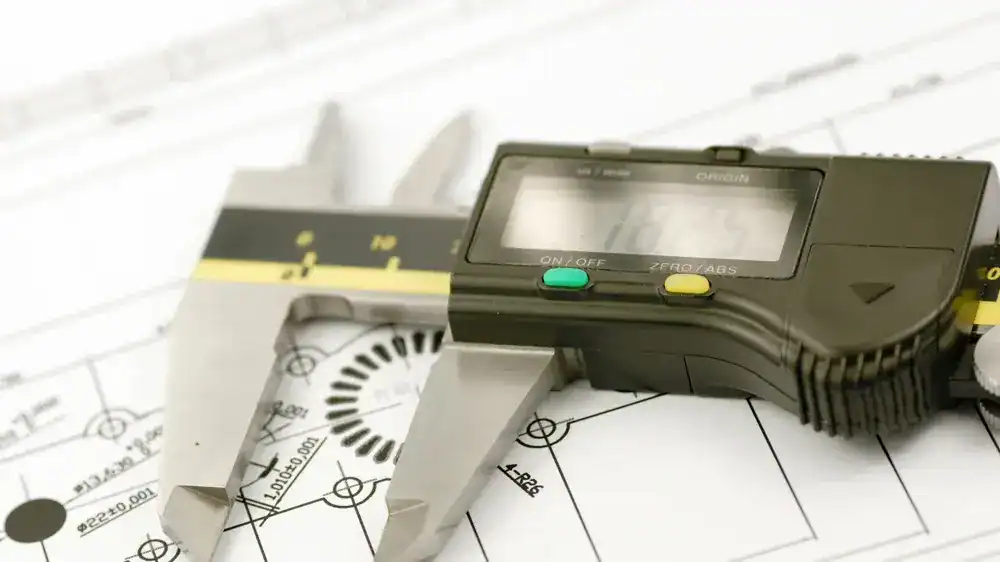
The future of calipers will focus on smarter technology, greater accuracy, and increased durability. Advanced materials will make calipers lighter and more stable, while wireless connectivity and app integration will streamline data collection. Improved ergonomics, intelligent feedback, and specialized designs will allow calipers to adapt to modern applications and deliver faster, more reliable measurements.
Calipers have remained a cornerstone of precision measurement for decades. While their core purpose hasn’t changed, their design, capabilities, and intelligence are evolving faster than ever before.
Today’s digital calipers already offer incredible precision and convenience, yet manufacturers continue to push boundaries. Calipers are continuing refining accuracy, improving ergonomics, and integrating advanced technologies that make these tools smarter and more capable. The future caliper won’t just measure; it will analyze, adapt, and communicate in ways that were once unimaginable.
This article will go into where the next generation of calipers is headed.
In This Article:
- Emerging Materials and Enhanced Durability
- Advancements in Accuracy
- Smart Calipers
- Enhanced User Experience
- Specialized Calipers
- The Future of Calipers FAQs
This is the last and final article in our series, The Definitive Guide to Calipers.
If you missed the last part of the series: Caliper Calibration, check it out now!
Emerging Materials And Enhanced Durability
The calipers of the future will be defined not only by their functionality but by the materials that make them. As measurement demands increase, manufacturers are exploring advanced alloys, composites, and coatings to create tools that perform flawlessly in even the harshest environments.
Advanced Composites and Alloys
Traditional stainless steel remains the industry standard, but new composite materials such as carbon fiber blends and titanium alloys are gaining traction. These materials offer superior strength-to-weight ratios compared to the current materials used to make calipers. These make calipers lighter without compromising rigidity and reduces operator fatigue during extended measurement sessions, while improving stiffness to ensure consistent accuracy across repeated use.
Temperature-Resistant Design
Thermal expansion has long been a source of subtle measurement error. Future calipers will increasingly feature low-expansion materials and thermal compensation sensors that automatically adjust for environmental changes. These improvements will allow for more reliable readings in temperature-variable settings like factory floors or field inspections.
Increased Longevity
Innovations in protective coatings such as ceramic or diamond-like carbon (DLC) finishes are extending caliper lifespan. These materials expand the caliper’s lifespan by resisting corrosion, abrasion, and coolant exposure. Combine these with tighter IP ratings and sealed electronics, and these enhancements will ensure that calipers can withstand modern manufacturing environments without losing accuracy.
Advancements In Accuracy
As industries move toward tighter tolerances and higher quality standards, the next generation of calipers is evolving to deliver even greater precision and repeatability.
Nano-Scale Measurement Capabilities
Digital calipers are becoming capable of nano-level resolution, which will allow the caliper to take ultra-fine measurements that was once reserved for coordinate measuring machines (CMMs). Manufacturers are achieving this through improved sensor design, laser-based scales, and more stable electronic components.
Self-Diagnostic Accuracy
Newer caliper models are starting to implements self-verification systems that will be able to perform quick internal check against known standards. These built-in diagnostics will alert the user if the caliper starts to drifts our of specification. This feature will help maintain confidence in every reading without manual comparisons tools.
Even with these advancements, periodic calibration on the caliper will remain essential and required to provide documented and traceable verification.
Improved Linearity and Parallelism
Recent advancements in machining technology now allow calipers to have sub-micron precision in jaw alignment. This will ensure consistent measurement along the entire length of the caliper. This advancement will reduce measurement error and boost reliability in multi-point inspections or critical tolerance checks.
Smart Calipers
Data integration is transforming how measurements are captured, shared, and analyzed. The next generation of calipers will not only measure but also think that will allow you to streamline workflows through connectivity and automation.
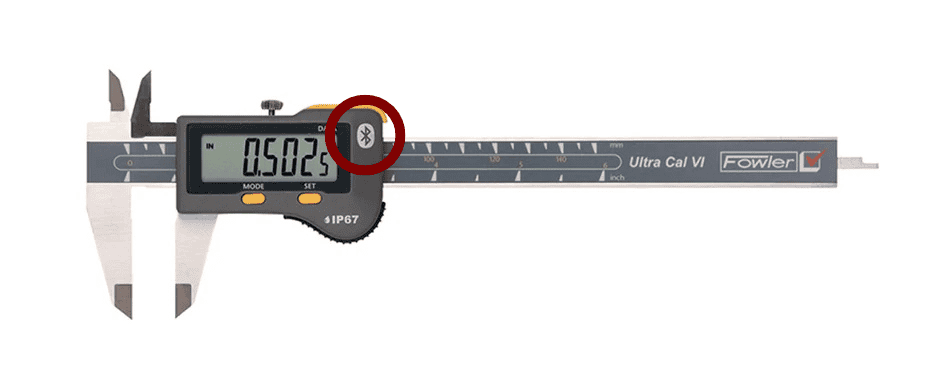
Bluetooth and Wireless Data Transfer
Most digital calipers today still rely on manual recording or wired data output. Future models will embrace seamless wireless transmission, allowing readings to be sent instantly to smartphones, tablets, or manufacturing systems. This eliminates transcription errors and accelerates quality checks.
App Integration and Cloud Connectivity
Imagine taking a measurement and having it automatically logged, categorized, and stored in the cloud. App-connected calipers will make this possible, offering customizable data fields, auto-tagging of parts or operators, and instant analytics. Engineers and inspectors will be able to review measurement data in real-time from any device, anywhere.
Predictive Feedback and Usage Insights
Smart calipers will also begin providing real-time user feedback. This advancement will alert operators to inconsistent measuring pressure, incorrect positioning, or environmental factors affecting results. Over time, these tools could even provide usage analytics, identifying measurement trends and helping users improve consistency and speed.
Enhanced User Experience
Even the most advanced caliper is only as good as its usability. The next era of caliper design will focus heavily on human-centered engineering, combining ergonomic improvements with smarter visual interfaces.
Redesigned Grips and Weight Balance
Future calipers will incorporate adaptive grips, contoured bodies, and optimized balance points to improve comfort and reduce slippage. These small refinements can have a big impact on productivity in repetitive measurement tasks.
Dynamic Displays and Interfaces
Traditional LCD readouts are giving way to high-contrast, backlit digital displays, touch interfaces, and even augmented overlays that help guide users through measurements. These calipers will visually highlight which surface to measure or warns when the jaws aren’t fully aligned.
Voice and Gesture Assistance
Voice-command functionality and gesture-based controls are already emerging in other industrial tools and calipers may soon follow. A voice-enabled caliper could log measurements or change modes hands-free, reducing downtime and simplifying complex measurement routines.
Specialized Calipers
As industries diversify, so do the measurement challenges they face. Tomorrow’s calipers will continue to evolve into application-specific instruments designed for increasingly specialized tasks.
Ultra-Miniature Calipers for Micro-Components
In electronics, biomedical, and aerospace sectors, parts are shrinking to near-microscopic sizes. New micro-calipers are being designed with ultra-thin jaws and enhanced optical magnification, allowing for precise measurements on components smaller than a millimeter.
3D and Non-Contact Calipers
Future models may integrate 3D scanning or laser triangulation to measure complex geometries without physical contact. This will enable users to take measurements on soft materials or delicate surfaces without risking deformation or damage.
Modular and Expandable Systems
The next phase of innovation for calipers may include modular calipers, allowing users to swap out jaw types, sensors, or display modules depending on the application. This will create a customizable measurement tool tailored to specific industries or tasks.
Conclusion
The caliper has come a long way from the simple mechanical tools of the past. As digital technology, materials science, and user experience design converge, the calipers of the future are poised to become smarter, stronger, and more intuitive than ever before.
Rather than replacing human skill, these innovations will enhance it. These new calipers will empower users to measure faster, more accurately, and more confidently in every environment. The future of calipers isn’t just about precision; it’s about creating a seamless bridge between craftsmanship and technology, ensuring that even in an automated world, the art of measurement remains in expert hands.
The Future Of Calipers FAQs
Q1. What materials will future calipers be made of?
Future calipers will made of stainless steel, carbon fiber, and ceramic-infused composites. These materials are lightweight, corrosion-resistant, and highly stable across temperature variations.
Q2. What are smart calipers?
Smart calipers are calipers equipped with wireless connectivity, data storage, and advanced sensors.
Q3. Will traditional digital calipers become obsolete?
No. While smart calipers will become more common, standard digital calipers will continue to offer reliable measurement for many applications.
Q4. Are wireless calipers accurate enough for industrial use?
Absolutely. Modern wireless calipers can maintain the same precision standards as their wired counterparts.
What’s Next: The Definitive Guide To Calipers
You’ve made it! If you have been following through each of the sections, you now know everything there is to know about calipers. Okay, maybe there is always a bit more that can be learned, but you have certainly gained more knowledge than all but maybe 1% of the population!
If you haven’t been through the whole series, check out the start of our series: What Is a Caliper?. You won’t regret the knowledge you gain on this awesome instrument.
ISO/IEC 17025 Accredited Caliper Calibration
Fox Valley Metrology offers precise caliper calibration for any make or model. Our ISO/IEC 17025 accreditation guarantees testing to the highest industry standards. We offer fast, reliable in-lab or onsite calibration services to fit your needs and schedule.
- ✓ ISO/IEC 17025 accredited calibration vendor
- ✓ Broadest calibration scope in the industry
- ✓ 3-5 day turnaround time in-lab calibrations
- ✓ Pickup and delivery service options
- ✓ Onsite calibration available