


What Is A Digital Multimeter?
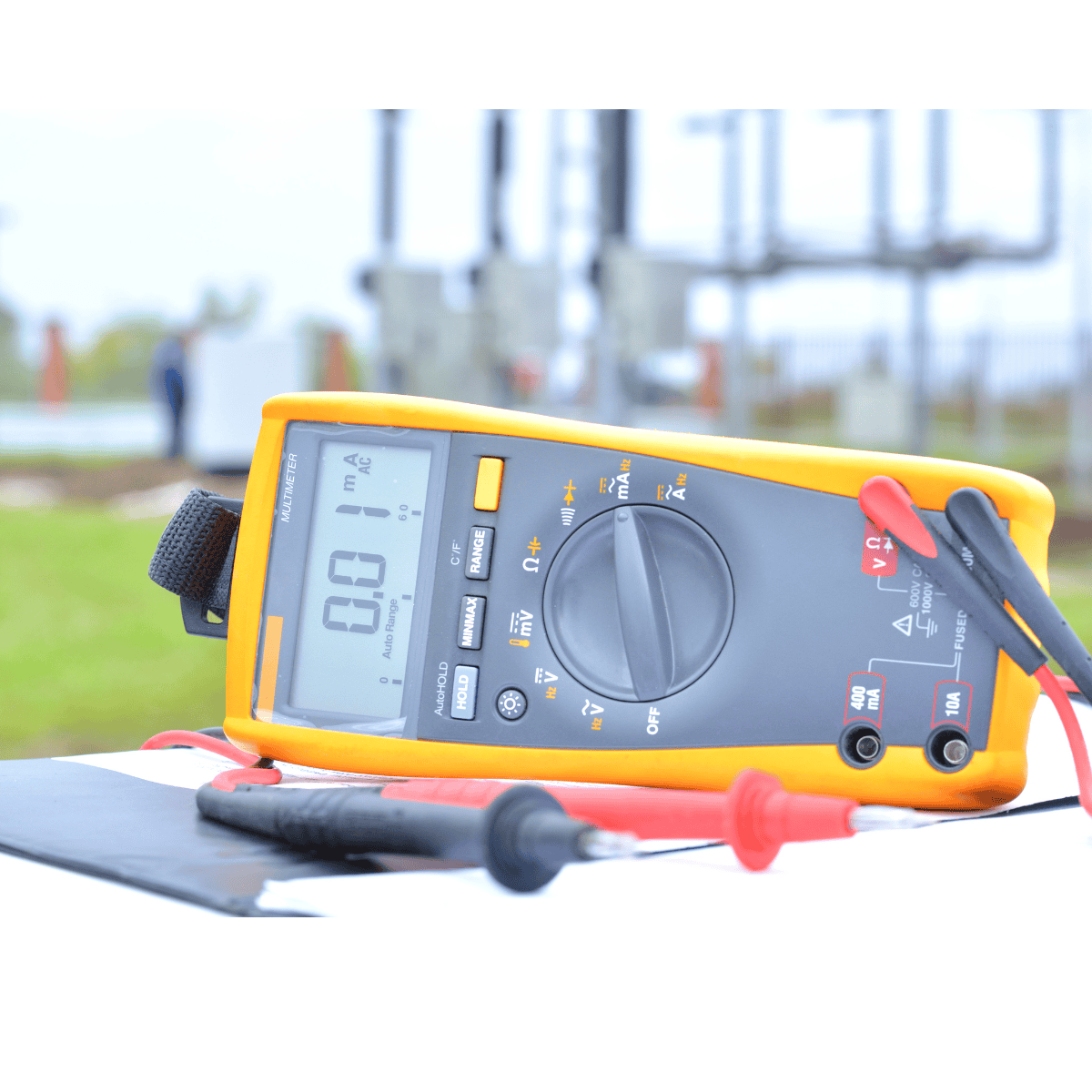
A digital multimeter (DMM) is an electronic measuring tool that displays precise numerical readings on an LCD or LED screen for modern electrical and electronic applications. It measures voltage, current, resistance, and often additional measurements like capacitance, frequency, temperature, and continuity.
Unlike an analog multimeters that uses mechanical movements and analog scales, DMMs use digital displays, typically consisting of a liquid crystal display (LCD) or LED screen, to provide precise numerical measurements.
DMMs can also offer additional features such as data logging, peak hold, continuity testing with audible beeps, diode testing, temperature measurement with external probes, and more. Some advanced DMMs may even have built-in wireless connectivity or USB ports for data transfer and integration with computer software.
This article discusses the digital multimeter (DMM) and its relative strengths and weaknesses.
In This Article:
- Digital Multimeter Components
- How Does a Digital Multimeter Work?
- Why Digital Multimeters Shine Today
- Digital Multimeter FAQs
This is the fifth article in our series, The Definitive Guide to Multimeters.
If you missed the last part of the series: Analog Multimeters, check it out now! You will be able to work your way back to this article quite quickly.
Digital Multimeter Components
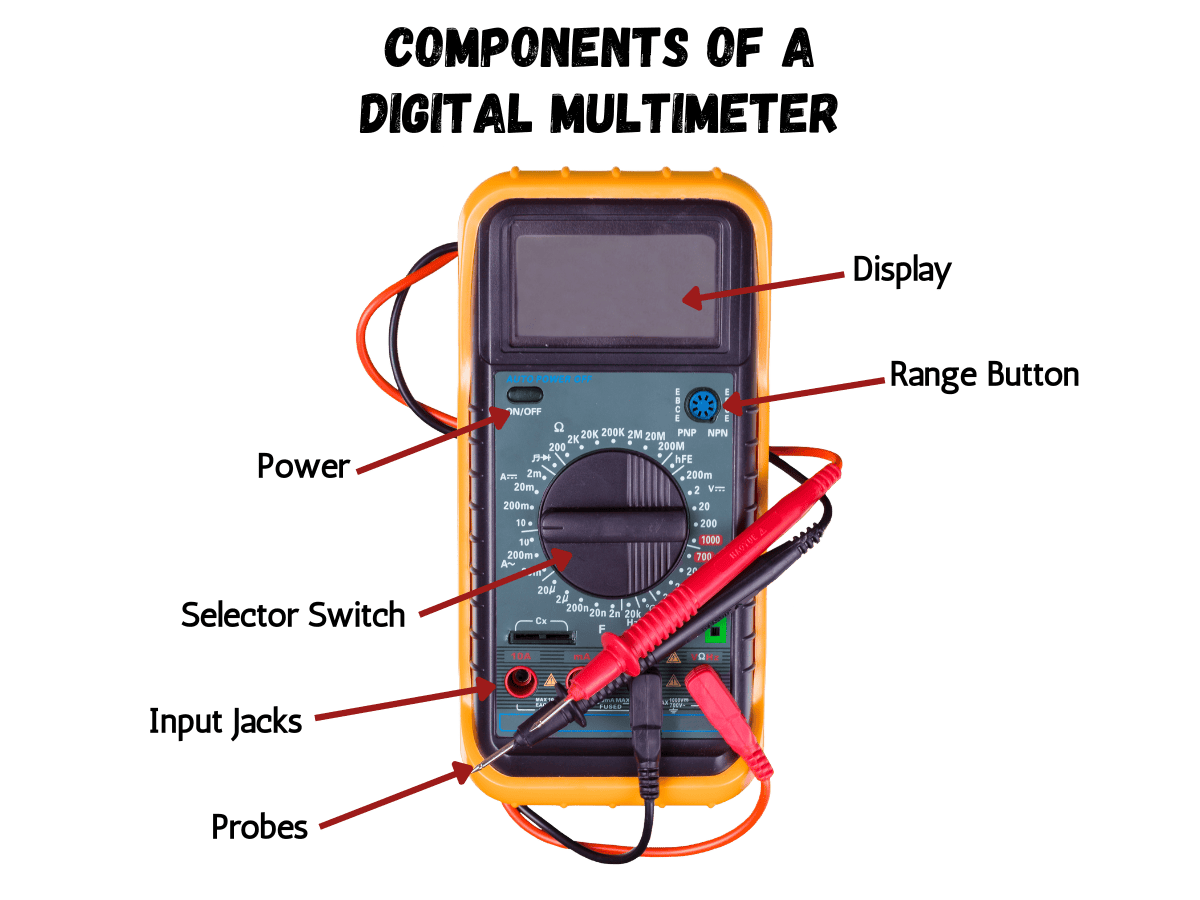
The main components of a typical digital multimeter (DMM) are:
- Display
- Selector Switch/Buttons
- Range Button
- Power Button
- Probes
- Input Jacks
- Battery Compartment
- Microprocessor/ASIC
- Internal Circuitry
Display
The display is one of the essential components of a digital multimeter. It can be an LCD (Liquid Crystal Display) or an LED (Light-Emitting Diode) screen. The display shows the measured values and other relevant information, such as units, symbols, and mode indicators.
Selector Switch/Buttons
Digital multimeters have a selector switch or buttons that allow you to choose the measurement function and range. The switch/buttons are used to select options such as voltage (AC or DC), current (AC or DC), resistance, capacitance, frequency, and temperature.
Range Button
Digital multimeters have a selector switch or buttons that allow you to choose the measurement function and range. The switch/buttons are used to select options such as voltage (AC or DC), current (AC or DC), resistance, capacitance, frequency, and temperature.
Power Button
Digital multimeters have a power button to turn the device on and off, helping conserve battery life when the multimeter is not in use.
Probes
Digital multimeters typically come with detachable probes for making electrical connections. The probes consist of a red (positive) and a black (negative) lead with metal tips or clips. These probes are used to connect the multimeter to the circuit or component being measured.
Input Jacks
Digital multimeters have input jacks where the probes are connected. The jacks are color-coded to match the color of the probes, typically red for positive and black for negative. The input jacks are labeled according to the measurement type, such as voltage, current, or resistance.
Battery Compartment
DMMs are powered by batteries, and they have a battery compartment for easy replacement when needed. The compartment is typically located on the back or bottom of the multimeter.
Microprocessor/ASIC
Digital multimeters contain a microprocessor or an Application-Specific Integrated Circuit (ASIC) that handles the measurement processing, conversion, and display functions. The microprocessor interprets the input signals and calculates the appropriate measurement values for display.
Internal Circuitry
Digital multimeters have internal circuitry that includes amplifiers, analog-to-digital converters (ADC), and other components necessary for signal conditioning, measurement accuracy, and data processing.
How Does A Digital Multimeter Work?
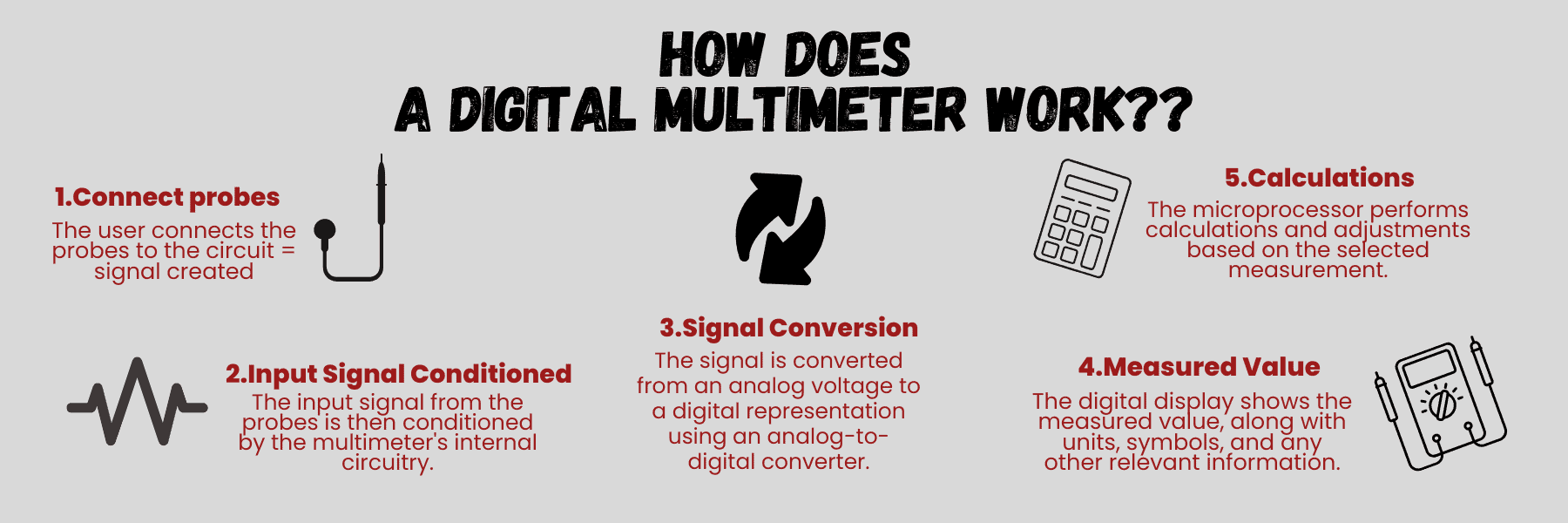
1. Probes Connected
When the user of the multimeter connects the probes to the circuit or component being measured, an input signal is created.
2. Input Signal Conditioned
The input signal from the probes is then conditioned by the multimeter’s internal circuitry. This circuitry may include amplifiers, filters, and other components to ensure accurate and reliable measurements.
3. Signal Converted
The conditioned signal is converted from an analog voltage or current into a digital representation using an analog-to-digital converter (ADC). The ADC samples the signal at regular intervals and assigns a digital value to each sample based on its amplitude.
4. Calculations Performed
Once the signal is digitized, it undergoes further processing by the multimeter’s microprocessor (or ASIC). The microprocessor performs calculations and adjustments based on the selected measurement function, range, and any additional features enabled.
5. Analog-to-Digital Conversion
An ADC samples the signal and converts it into a digital value based on amplitude.
6. Processing
The microprocessor or ASIC calculates the measurement, adjusting for the selected function (e.g., resistance) and range.
7. Measurement Displayed
Finally, the processed measurement value is sent to the multimeter’s display. The digital display shows the measured value, along with units, symbols, and any other relevant information.
Why Digital Multimeters Shine Today
DMMs offer unmatched precision and versatility, with 2025 models boasting:
- Accuracy: Typically ±0.5% or better, compared to ±2% for analog multimeters.
- Features: Auto-ranging, data logging, true-RMS, and IoT connectivity for real-time monitoring.
- Applications: Diagnosing EV battery systems, testing solar inverters, or prototyping IoT sensors.
Limitations: Reliance on batteries and potential screen readability issues in bright sunlight.
Case Study: A technician uses a 2025 DMM with true-RMS to troubleshoot a variable-speed motor drive, ensuring accurate readings for non-sinusoidal waveforms.
Even with a higher level of precision compared to an analog multimeter, a digital multimeter can still drift overtime which is why it is important to have the multimeter calibrated especially when working in professional environments.
Conclusion
Digital multimeters are the backbone of 2025 electronics, offering precise measurements of voltage, current, resistance, and beyond, with cutting-edge features like IoT integration. Whether you’re testing a smart home circuit or an EV battery, DMMs deliver reliability and versatility. Explore their capabilities, compare them to analog models, or start measuring with confidence today.
Digital Multimeter FAQs
Q1. Can digital multimeters measure both AC and DC?
Yes, digital multimeters have a dedicated setting for both AC and DC voltage and current.
Q2. What is auto-ranging?
Auto-ranging is when the digital multimeter automatically selects the optimal measurement range, which simplifies usage.
Q3. What are the limitations of a digital multimeter?
Digital multimeters depend on battery power and may have reduced screen visibility in bright sunlight. These limitations can impact the usability in certain environments.
Q4. Are digital multimeters better than analog multimeters?
For most tasks, yes, digital multimeters are better due to their higher accuracy and advanced features.
The Definitive Guide To Multimeters
What’s Next: Should I Use An Analog Or Digital Multimeter?
Now that we know all about digital multimeters, its time to explore the differences between digital multimeters and their brother, analog multimeters.
In the next section, we will dive explore these differences in detail and set you up to make the best decision of what is right for you. Let’s get started and head to Section 6: Analog vs. Digital Multimeters.
ISO/IEC 17025 Accredited Multimeter Calibration
Fox Valley Metrology offers precise multimeter calibration for any make or model. Our ISO/IEC 17025 accreditation guarantees testing to the highest industry standards. We offer fast, reliable in-lab or onsite calibration services to fit your needs and schedule.
- ✓ ISO/IEC 17025 accredited calibration vendor
- ✓ Broadest calibration scope in the industry
- ✓ 3-5 day turnaround time in-lab calibrations
- ✓ Pickup and delivery service options
- ✓ Onsite calibration available