


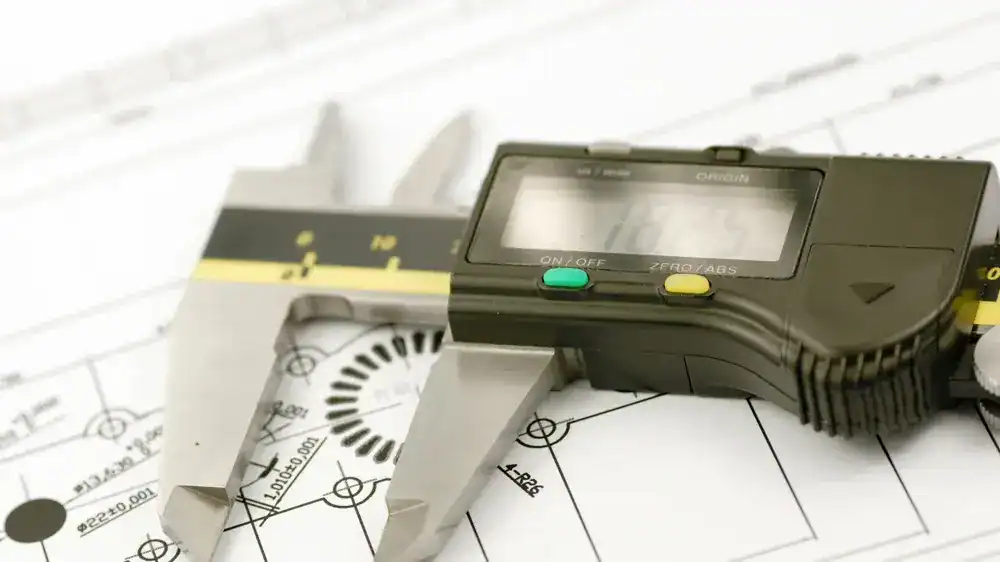
What Are The Common Uses Of A Caliper?
Calipers are widely used for both professional and everyday measurement tasks that require accuracy. In industry, they help verify part dimensions in manufacturing, automotive, aerospace, and engineering applications. In everyday use, calipers are commonly used for DIY projects to measure wood thickness and hole depths, check pipe and fitting sizes in plumbing, and verify screw and bolt dimensions, making them a versatile tool for precise measurements at work and at home.
Why are calipers such a big deal? The simple answer is because of the caliper’s ease of use and wide range of applications.
Calipers have become one of the most common and important pieces of measuring equipment today. They can be found in almost every industry where accurate physical measurements are not only required, but are crucial to the job.
In this article we will explore why the caliper continues to be a must-have precision measurement tool across so many industries.
In This Article:
- Industries that Rely on Calipers
- Types of Measurements
- Everyday Applications for Calipers
- Common Uses of a Caliper FAQs
This is the eleventh article in our series, The Definitive Guide to Calipers.
If you missed the last part of the series: How to Use a Caliper, check it out now!
Industries That Rely On Calipers
Calipers play a vital role in numerous industries, from manufacturing, to engineering, and to delicate craftsmanship. Each industry depends on precise measurement to ensure quality, safe, and performative products and the caliper delivers the versatility to meet those standards.
Automotive
In the automotive industry calipers are found everywhere on an assembly line and machine shops for parts like shafts, gear, engine components, brake parts, etc. For example, an operator might use a caliper to quickly check the diameter of a piston pin or the thickness of a brake disc. The efficiency of a caliper allows the user to make quick pass/fail decisions on high-volume parts. However, for tighter tolerances that you might find on engine components, micrometers and CMMs are usually the go to tool. Still, a caliper can play a big role in inspecting supplier parts and in-process adjustments.
Aerospace
Aerospace parts often have tighter tolerances and more stringent documentation so calipers are often used for less critical features or as a quick reference point in the aerospace industry but still play a big role nonetheless. For instance, on an aircraft turbine blade, a caliper could check the overall lengths or tab widths where ±0.05 mm might be acceptable, but the aerodynamic surfaces would have to be checked by a more precise instrument like a CMM. Additionally, aerospace manufacturers often invest in high-end digital calipers with connectivity, so data goes straight into quality databases, reducing any chance of transcription error.
Metal Fabrication and Machining
Metal fabrication and machining rely on caliper constantly because of their versatility. A single caliper can measure the thickness of a steel plate, an inner diameter of a pipe, or the depth of a milled pocket. Fabricators often favor vernier or dial calipers because of their durability and don’t mind the dirt (digital calipers are also used, but old-schooled machinists stick with the dial caliper). In welding or fabrication sometimes measurement are “rough” and caliper suffice more than using a tape measure for short distances. Machinists on the other hand often have a 6″ caliper on them at all times as a general, all purpose gage. Many of these shops with ISO 19001 or AS9100 certification will have to ensure routine calibration for their calipers.
Medical
Calipers are used in the medical field to measure things like tubing diameters, device castings, and surgical instrument dimensions. Some medical devices are very small and are beyond the range of a caliper, but many parts in the industry are in the range of a caliper. Sometimes plastic calipers are used if scratching the part must be avoided.
Jewelry
Even jewelers rely on this precision tool. They use a caliper to measure rings, gemstones, and intricate pieces where accuracy needs to be implemented for fit and appearance
Types Of Measurements
Within those industries, calipers are used to measure almost every physical dimension of a given product, making them an incredibly flexible measuring tool. Some examples of these possibilities are the following:
Outside Dimensions
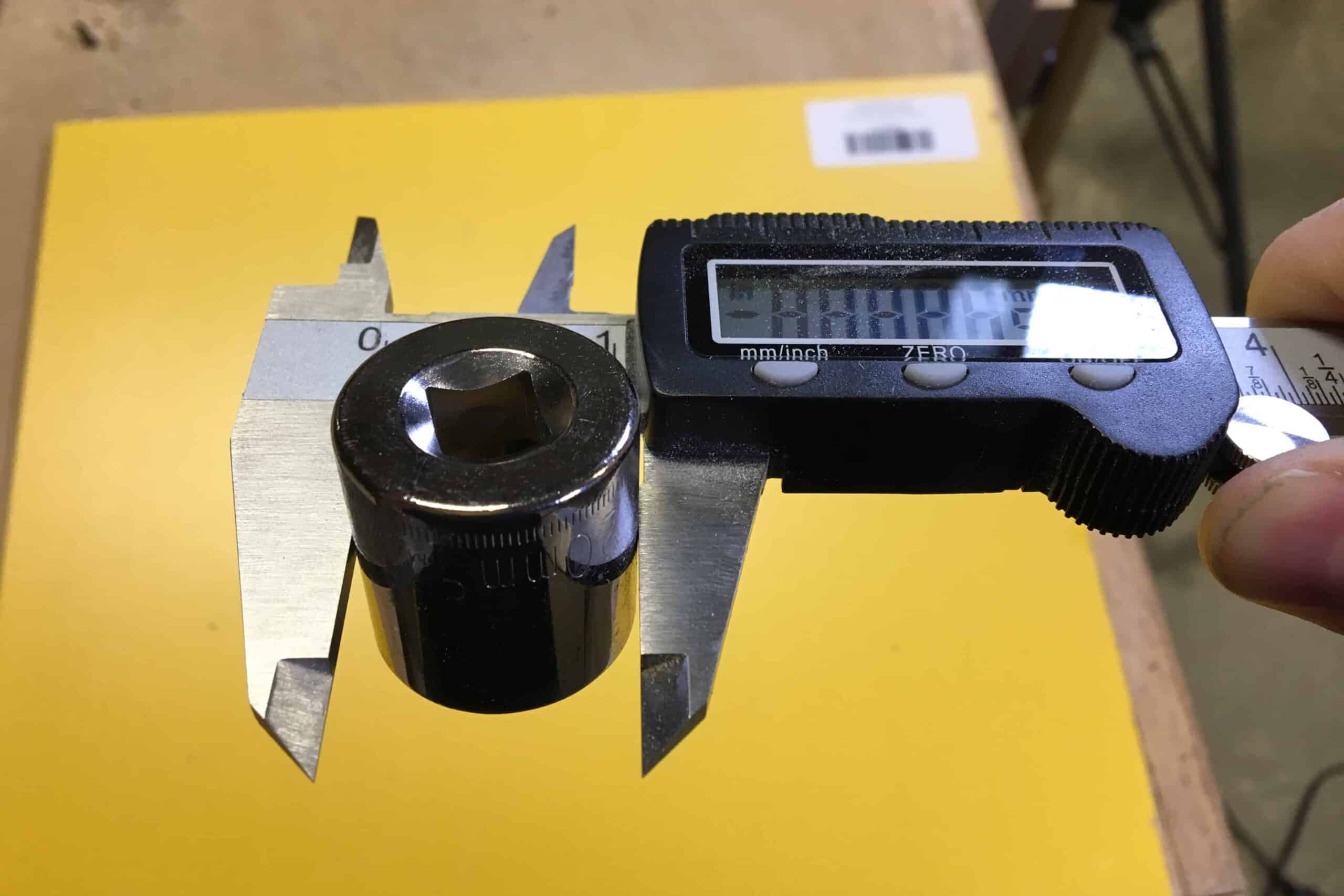
A caliper can be used to measure the outside diameter of an object or the outside width of an object, such as a shaft or a gear.
Inside Dimensions
A caliper can be used to measure the inside diameter of a hole or the inside width of an object, such as a pipe or a ring.
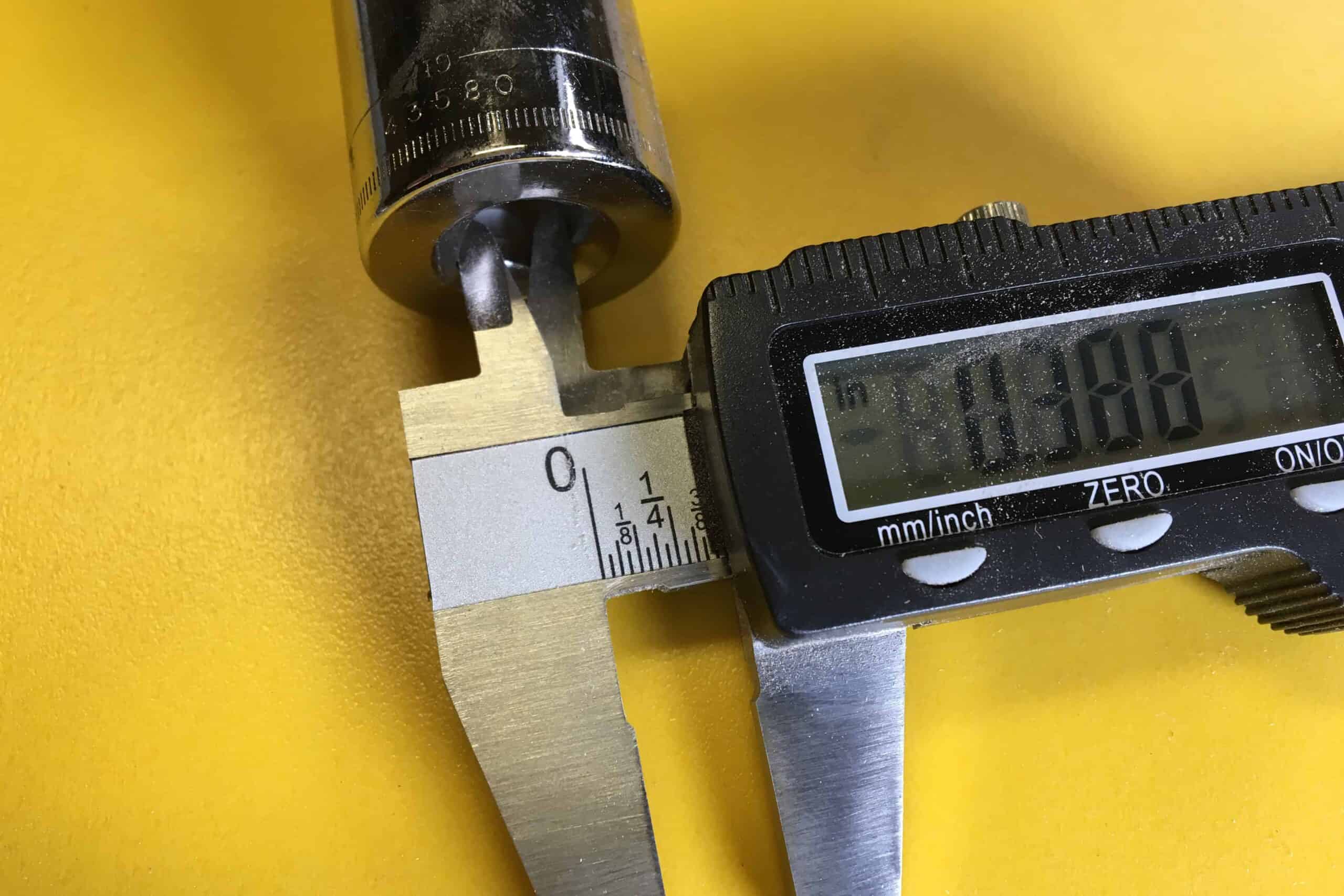
Depth Measurements
A caliper can be used to measure the depth of a hole or the thickness of an object, such as a sheet of metal or a piece of wood.
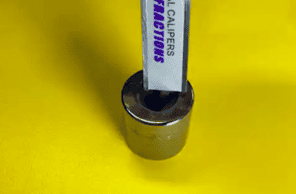
Step Measurements
A caliper can be used to measure the height or depth of a step, such as a stair or a gear tooth.
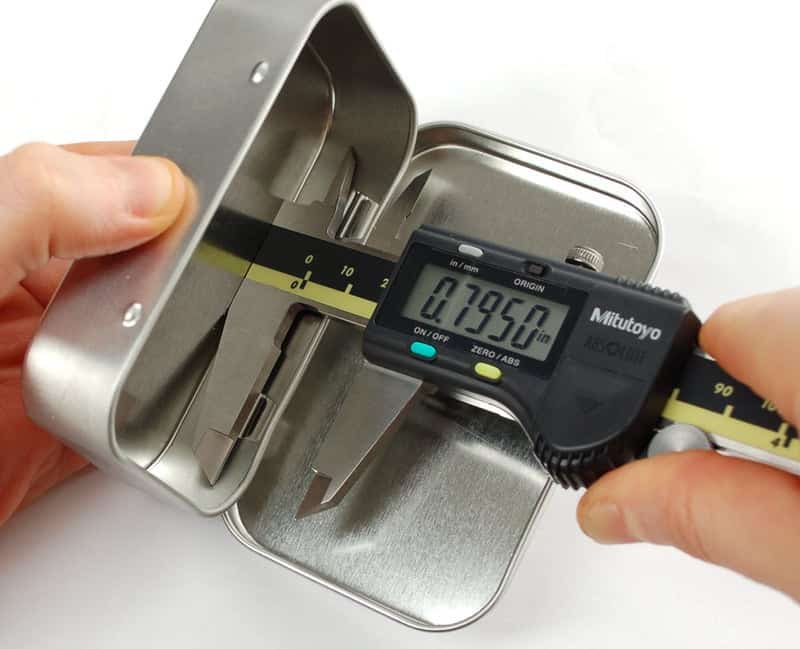
Everyday Applications For Calipers
While calipers are used in numerous professional industries, they can be just as handy and useful for everyday projects around the house. Calipers can give you that extra measurement where a simple straight edge ruler just won’t cut it. Whether you are building, fixing, or verifying something, a caliper can make precise measurements for anyone. Some examples are the following:
Measuring Wood for DIY Projects
You finally are getting around to building those new shelves that you have been putting off for weeks, but you need to know the width of the wood for this project. A caliper can be used to measure the thickness of boards or the depth of a drilled hole to ensure that everything fits snugly and that you don’t have broken shelves once you start to put weight on them.
Fitting Plumbing Parts
Your calipers can be used to measure the inside diameter of pipers or fittings. That way you are 100% confident with the correct size that you need so you don’t have to make two trips to Home Depot or Lowes.
Verifying Screw and Bolt Sizes
Do you have a loose screw or need a matching bolt? Skip all that time trying to figure out the size you need and grab your caliper and measure the thread diameter and length so you can get the right hardware and complete your project.
Conclusion
Calipers aren’t just tools that sit in your toolbox untouched, they are problem solvers across diverse industries and in everyday home use. Their ability to measure inside, outside, depth, and step dimensions is one of the most versatile pieces of precision equipment that you can use.
Common Uses of a Caliper FAQs
Q1. Which industries use calipers the most?
Manufacturing, automotive, and aerospace industries heavily rely on calipers, but they are commonly used in nearly every field that requires precise measurements.
Q2. Why are calipers preferred over rulers?
Unlike the straight edge ruler, a caliper can measure a variety of dimensions such as inside, outside, and depth. Calipers also measure very small tolerances with high accuracy.
Q3. Are digital calipers better for industry use?
Typically digital calipers are used more often in industries that require precise measurements due to the digital caliper’s ability to quickly read measurements and reduce errors, but vernier and dial calipers are still used in an industry setting.
The Definitive Guide To Calipers
What’s Next: How Do I Properly Maintain A Caliper?
We have gone over how calipers are used across industries, what measurements they can take, and how you can use them in an everyday setting.
Now it is time to look at how to maintain and take care of your caliper so that these measurements that you have learned how to do will be accurate. Let’s get started and head to Section 12: Care and Maintenance of Calipers.
ISO/IEC 17025 Accredited Caliper Calibration
Fox Valley Metrology offers precise caliper calibration for any make or model. Our ISO/IEC 17025 accreditation guarantees testing to the highest industry standards. We offer fast, reliable in-lab or onsite calibration services to fit your needs and schedule.
- ✓ ISO/IEC 17025 accredited calibration vendor
- ✓ Broadest calibration scope in the industry
- ✓ 3-5 day turnaround time in-lab calibrations
- ✓ Pickup and delivery service options
- ✓ Onsite calibration available