


What Features And Accessories Should I Look For In A Caliper?
When you are going to buy a caliper, don’t just look at the type and size, features are going to matter just as much for your caliper. IP ratings are going to protect your caliper against dirt and water, SPC and wireless SPC are going to streamline your data collection saving you tons of time, jaw attachments will transform you caliper to make measurements you weren’t able to make previously, and digital calipers will have options like unit switching and hold functions that will make your work easier and more efficient.
Back in the day, it was simple to pick out a caliper, all you needed to know what kind you needed and what size would be best suited for you.
Today, modern calipers come with additional features that can make your measurements even more precise and send you further down the caliper buying process rabbit hole. From features to protection from dust and water to ways a caliper can collect data, these features can make a noticeable difference when taking into consideration what caliper you need for your work and environment.
This article breakdown the key features to consider when buying a modern caliper and will help you in the process of choosing the right caliper for your needs and environment.
In This Article:
- IP Rating
- Statistical Process Control (SPC)
- Jaw Attachments
- Other Useful Caliper Features
- Caliper Features FAQs
This is the eighth article in our series, The Definitive Guide to Calipers.
If you missed the last part of the series: Caliper Accuracy, check it out now!
IP Rating
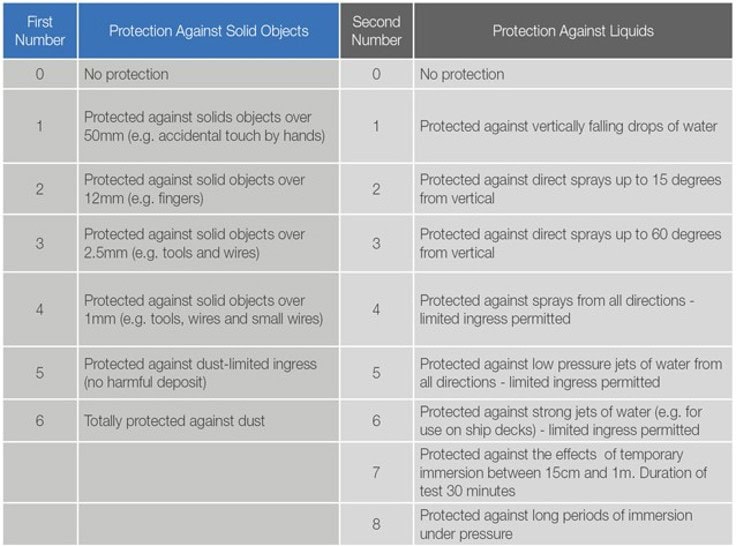
The IP rating, also known as the “Ingress Protection” rating, is a standard that measures the level of protection a caliper has against dust and water. A higher IP rating means that the caliper is more protected against dust and water. The IP rating is represented by two digits, the first digit indicating the level of protection against solid particles and the second digit indicating the level of protection against liquids. The most common IP ratings for calipers are the following:
IP54
The IP54 rating indicates that the caliper is protected against dust ingress and splashing water.
IP67
The IP67 rating indicates that the caliper is protected against dust ingress and immersion in water up to a depth of 1 meter for up to 30 minutes.
IP68
The IP68 rating indicates that the caliper is protected against dust ingress and immersion in water up to a depth of 1.5 meters for a long period of time.
The general rule of thumb is that the higher the IP rater, the more durability and protection that your caliper is going to have in harsher environments. These IP ratings by no means indicate that you can spike your caliper into the ground like you just scored a touchdown (although we all have those days where we feel like doing that), but rather it is going to give you more protection and last longer in rougher conditions than a caliper without these ratings would.
SPC Data Collection
SPC (Statistical Process Control) is a feature that allows for the collection of measurement data and its analysis for quality control and process improvement. Some calipers have the ability to connect to a computer for data collection and analysis. A caliper with an SPC feature is going to be beneficial to a user if they have multiple measuring points and can automatically input readings instead of manually recording the measurements. However, automated data collection is only as reliable as the instrument itself, which is why having your caliper calibrated periodically will ensure that your measurements are being recorded accurately.
Wireless SPC
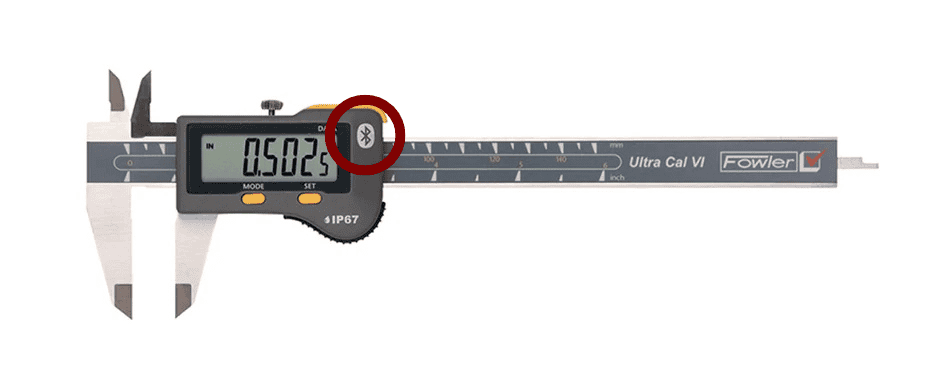
Some tools allow for the passing of SPC data collection via wireless signal or Bluetooth, allowing for the usage of the tool far away from a computer – potentially right on the production line.
Jaw Attachments
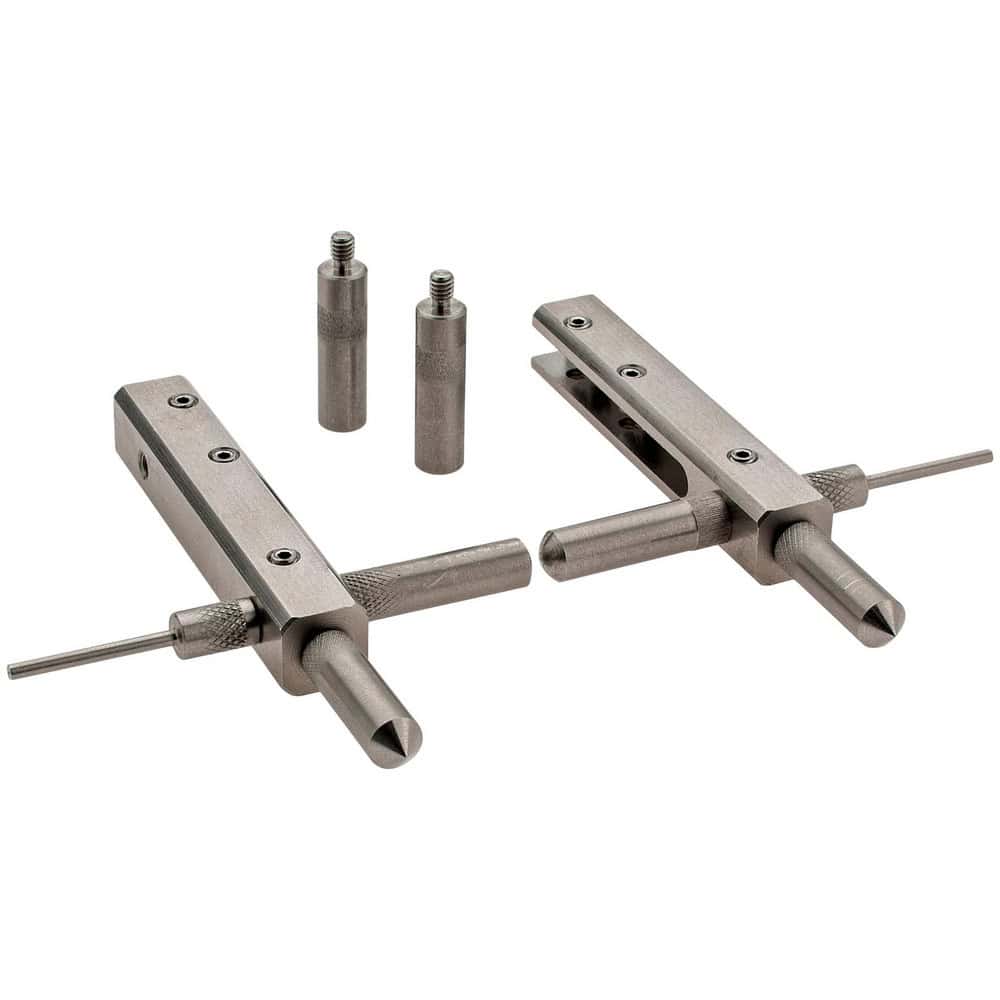
If the caliper you have is unable to make hard to reach measurements or you don’t have the budget in your quality program to purchase a specialty caliper, your best alternative would be to purchase attachments for the jaws of your current caliper.
Caliper jaw attachments expand what a standard caliper can measure and makes it far more versatile. This also makes for a great alternative for a beginner who may not own multiple measuring tools. These attachments are designed to adapt and attach to your standard caliper for specific applications that standard jaws can not handle easily or accurately. Some common jaw attachments include knife edges for measuring narrow grooves or offset jaws for making measurements when the thicknesses of the part being measured is offset.
While these may seem like a great alternative you need to keep in mind that these are attachments and not actually part of the caliper itself. These attachments may affect the accuracy of your measurements whereas using a specialty caliper designed for specific applications will produce more accurate results compared to these attachments. Jaw attachments are still accurate and reliable, but if your quality program calls for tighter tolerances, it may be in your best interest to go out and purchase that specialty caliper for the measurement that is at hand.
Other Useful Caliper Features
Calipers can come packed with features that are designed to make your measurements faster, more accurate, and overall be less of a hassle. While not all the features are a “must-have”, they all can make your work experience easier. Here are some of the most common features that you will see on modern calipers:
Hold (Freeze) Function
The hold or freeze function allows you to keep a measurement displayed on your screen, even after you remove the caliper from the object.This feature is going to be the most useful in situations where you are measuring a hard-to-reach spot and you can’t quite tell what that last number is on the display. You can remove the caliper from the object and see what that reading is. This feature also comes in handy when you need to write down results but do not want to risk the jaws moving and losing your measurement. The hold function is also beneficial for beginners as they may not have the feel of a caliper yet and how to keep a measurement steady.
Unit Switching
One of the biggest features that digital calipers have is their ability to switch between measurements at a push of a button. No need to convert measurements using formulas or manual math. Calipers with this feature allows you to easily toggle between units such as inches, centimeters, millimeters, etc. This feature is the most useful in industries where parts and designs may come from multiple countries that use a different unit system.
Conclusion
Like we mentioned in the beginning of this post, choosing a caliper isn’t just about the type or size, it is also about finding the right features that will benefit you in the environment that you will be working in. If you work around dust, water, or harsher environments, prioritize IP ratings. If you have hundreds of measurements that you make a day, look for a caliper that has SPC or Wireless SPC features. If you are looking for convenience, a caliper with digital features such as unit switching or hold functions will make your job more efficient. Once you have the caliper picked out that is the right type, size, and has the features you need, your measurements are going to increase in accuracy, efficiency, and consistency.
Caliper Features FAQs
Q1. Do I really need a caliper with an IP rating?
Not necessarily. If you are working in a clean environment, you may not need a caliper with an IP rating. If you are working on shop floors or outdoor work, an IP rating on your caliper can protect your caliper from dust, grime, and water.
Q2. Does having a higher IP rating affect measurement accuracy?
A higher IP rating on your caliper does not directly apply to having better accuracy, but it does help protect your caliper from dirt, dust, water, and grime that can affect the accuracy of your caliper.
Q3. Is SPC only useful in manufacturing?
Not at all. SPC can be useful in any industry or setting where you want consistent measurement tracking.
Q4. Are digital calipers always better than manual ones?
Not always. Where digital calipers may come with more features, they are often less durable than their vernier and dial counterparts. Each type of caliper has their pros and cons.
The Definitive Guide To Calipers
What’s Next: What Do I Consider When Buying A Caliper?
You have learned a lot about calipers so far. From what types there are, what sizes they come in, and what features a caliper can come with.
I think it is time to start thinking about selecting the right caliper for you and your applications. Let’s get started and head to Section 9: What to Consider When Buying a Caliper.
ISO/IEC 17025 Accredited Caliper Calibration
Fox Valley Metrology offers precise caliper calibration for any make or model. Our ISO/IEC 17025 accreditation guarantees testing to the highest industry standards. We offer fast, reliable in-lab or onsite calibration services to fit your needs and schedule.
- ✓ ISO/IEC 17025 accredited calibration vendor
- ✓ Broadest calibration scope in the industry
- ✓ 3-5 day turnaround time in-lab calibrations
- ✓ Pickup and delivery service options
- ✓ Onsite calibration available